
For many people with Type 2 hair, the journey toward a sulfate-free lifestyle feels like a paradox. You are told that sulfates—the harsh detergents like Sodium Lauryl Sulfate (SLS)—strip the hair of essential oils and destroy curl patterns. Naturally, you reach for a sulfate-free alternative. But then, the "wave collapse" happens. Suddenly, your bouncy, effortless waves are replaced by limp, stringy strands that feel greasy by midday.
Quick Verdict: Switching to a certified sulfate-free shampoo is the single most effective way to preserve hair hydration, protect artificial hair color, and extend salon keratin treatments. By eliminating aggressive anionic surfactants like SLS and SLES, gentle glucoside and isethionate cleansers remove daily sebum and buildup without stripping your scalp's vital protective lipid barrier.
As a trichologist and cosmetic chemist, I can tell you exactly why this happens: most sulfate-free shampoos are formulated for curly or coily hair, not wavy hair.
While curls (Type 3 and 4) crave heavy lipids, dense butters, and high-deposition polymers to combat dryness, wavy hair (Type 2A, 2B, and 2C) requires a delicate balance. You need a sulfate free shampoo for wavy hair that provides enough cleansing power to remove sebum and styling buildup, but rinses clean enough to allow your natural S-pattern to spring back to life.
In this definitive guide, we will dive into the chemistry of surfactants, the difference between wavy and curly cleansing needs, and how to choose a lightweight shampoo for waves that maximizes volume without sacrificing health.
The Chemistry of the Cleanse: Why "Sulfate-Free" Isn't One-Size-Fits-All
To understand why some products weigh your hair down, we have to look at the surfactant system. Surfactants are the molecules responsible for lifting oil and dirt from the scalp so they can be rinsed away with water. Sulfates are the "gold standard" for cleansing power, but they are often too aggressive for the fragile cuticle of wavy hair.
When a brand creates a "sulfate-free" formula, they replace those harsh agents with milder surfactants. However, not all mild surfactants are created equal. In many "curl creams in a bottle" (shampoos designed for tight curls), chemists add high concentrations of cationic polymers and heavy oils to prevent the hair from feeling too clean. For a curly person, this is a blessing. For someone seeking a type 2 hair cleanser, it is a recipe for flatness.
The Ideal Surfactant Blend for Waves
A high-performance wavy hair sulfate free shampoo should utilize a synergistic blend of surfactants to achieve a "clean-rinse" feel. Look for these ingredients on the label:
- Sodium Cocoyl Isethionate: Often called "baby foam," this is an anionic surfactant that provides a rich lather but is incredibly gentle on the scalp.
- Sodium Lauroyl Sarcosinate: This provides excellent cleansing and helps the shampoo rinse away completely, leaving no residue to flatten the wave.
- Cocamidopropyl Betaine: An amphoteric surfactant that reduces irritation and helps stabilize the formula's viscosity.
- Decyl Glucoside: A nonionic surfactant derived from corn or coconut that adds mildness without adding weight.
When these are balanced correctly, you get the "best of both worlds": a scalp that feels fresh and waves that maintain their structural integrity and volume.
Wavy Hair vs. Curly Hair: The Cleansing Divide
The most common mistake in the beauty industry is grouping all "textured hair" into one category. From a trichological perspective, the needs of Type 2 (Wavy) and Type 3/4 (Curly/Coily) hair are fundamentally different due to the shape of the follicle and the way sebum travels down the hair shaft.
In curly hair, the tight coils prevent scalp oils from traveling efficiently down the strand, leading to chronic dryness. Therefore, curly hair shampoos are often "moisture-heavy," containing high levels of shea butter, coconut oil, and heavy silicones.
Wavy hair, however, has a looser S-shape. Sebum travels more easily down the hair shaft. When you apply a heavy, moisturizing curly-hair shampoo to wavy hair, the combination of your natural oils and the product's heavy emollients creates a film. This film increases the weight of each strand, stretching the S-curve until it disappears, resulting in a loss of sulfate free shampoo wavy hair volume.
Comparison: Cleansing Requirements by Hair Type
| Feature | Wavy Hair (Type 2) | Curly/Coily Hair (Type 3/4) |
|---|---|---|
| Primary Goal | Volume, Bounce, Scalp Freshness | Moisture, Definition, Frizz Control |
| Ideal Surfactant Load | Moderate to High (Clean-Rinsing) | Low to Moderate (Creamy/Conditioning) |
| Preferred Lipids | Lightweight esters, Squalane, Aloe | Shea Butter, Coconut Oil, Castor Oil |
| Risk of Over-Conditioning | High (Leads to limp, oily roots) | Low (Usually requires more moisture) |
| Wash Frequency | Every 1-3 days | Once a week or every 10 days |
Identifying "Weighty" Ingredients: What to Avoid
If you are searching for a lightweight shampoo for waves, you must become a label reader. Many products market themselves as "sulfate-free" and "natural" but contain ingredients that are simply too heavy for a Type 2 pattern.
The "Volume Killers"
These ingredients are wonderful for Type 4 hair but can be disastrous for fine wavy hair:
- Heavy Butters: Shea butter and cocoa butter are occlusive and dense. In a shampoo, they can leave a residue that attracts dust and weighs down the root.
- Concentrated Coconut Oil: While great for some, coconut oil can be too heavy for low-porosity waves, causing the hair to feel "coated."
- Heavy Silicones: Dimethicone and Amodimethicone provide slip, but if they aren't easily removable, they build up over time, flattening your waves.
- Dense Polyquaterniums: Some conditioning polymers are designed to "stick" to the hair to provide long-term smoothness. For waves, too much of this "stick" leads to a stringy appearance.
The "Wave Boosters"
Look for these humectants and lightweight agents instead:
- Hyaluronic Acid: Provides hydration without adding oil or weight.
- Aloe Vera: A natural humectant that soothes the scalp and adds a light layer of moisture.
- Propanediol: A lightweight solvent that helps ingredients penetrate without leaving a greasy film.
- Hydrolyzed Proteins: Small amounts of silk or wheat protein can actually help "strengthen" the wave pattern, giving it more bounce.

The Ultimate Wash Routine for Maximum Wave Volume
Using the right sulfate free shampoo for wavy hair is only half the battle. The way you apply and rinse your products determines whether your waves will pop or flop.
- Thorough Saturation: Ensure your hair is dripping wet with warm water. This helps the mild sulfate-free surfactants emulsify more effectively.
- Targeted Application: Apply your shampoo only to the scalp. Use your fingertips to massage the skin for 60 seconds. Do not scrub the lengths of your hair; this can roughen the cuticle and cause frizz.
- The "Run-off" Cleanse: As you rinse the shampoo from your scalp, the soapy water will naturally flow over the mid-lengths and ends. This is sufficient to clean the ends without stripping them or causing tangles.
- The Double Rinse: Sulfate-free formulas can sometimes be harder to rinse than traditional shampoos. Rinse for an extra 30 seconds to ensure no surfactant residue remains, as this is a leading cause of limp hair.
- Strategic Conditioning: Apply conditioner only from the ears down. Never put conditioner on your roots if you are trying to maintain volume.
- Microfiber Squeeze: Avoid rubbing your hair with a terry cloth towel. Instead, gently squeeze the water out with a microfiber towel or an old cotton T-shirt to preserve the S-pattern.
Understanding Porosity: Tailoring Your Cleanse
To truly master your wavy hair routine, you must understand your hair's porosity—how easily your hair absorbs and retains moisture.
Low Porosity Waves
If your hair takes a long time to get wet and products tend to sit on the surface, you have low porosity. You are most susceptible to product buildup. For you, a type 2 hair cleanser must be very lightweight. You should also rotate in a sulfate-free clarifying shampoo once every two weeks to "reset" the hair and prevent the waves from stretching out.
High Porosity Waves
If your hair absorbs water instantly but dries quickly and feels rough, you have high porosity. Your cuticles are more open, meaning you can handle slightly more emollience. You may benefit from a sulfate-free shampoo that contains a small amount of lightweight oils (like jojoba or argan) to help seal the cuticle and reduce frizz.
Featured Top-Rated Sulfate-Free Recommendations
Based on rigorous ingredient safety evaluations, trichologist testing, and verified buyer reviews, here are our top recommended choices for this hair category:
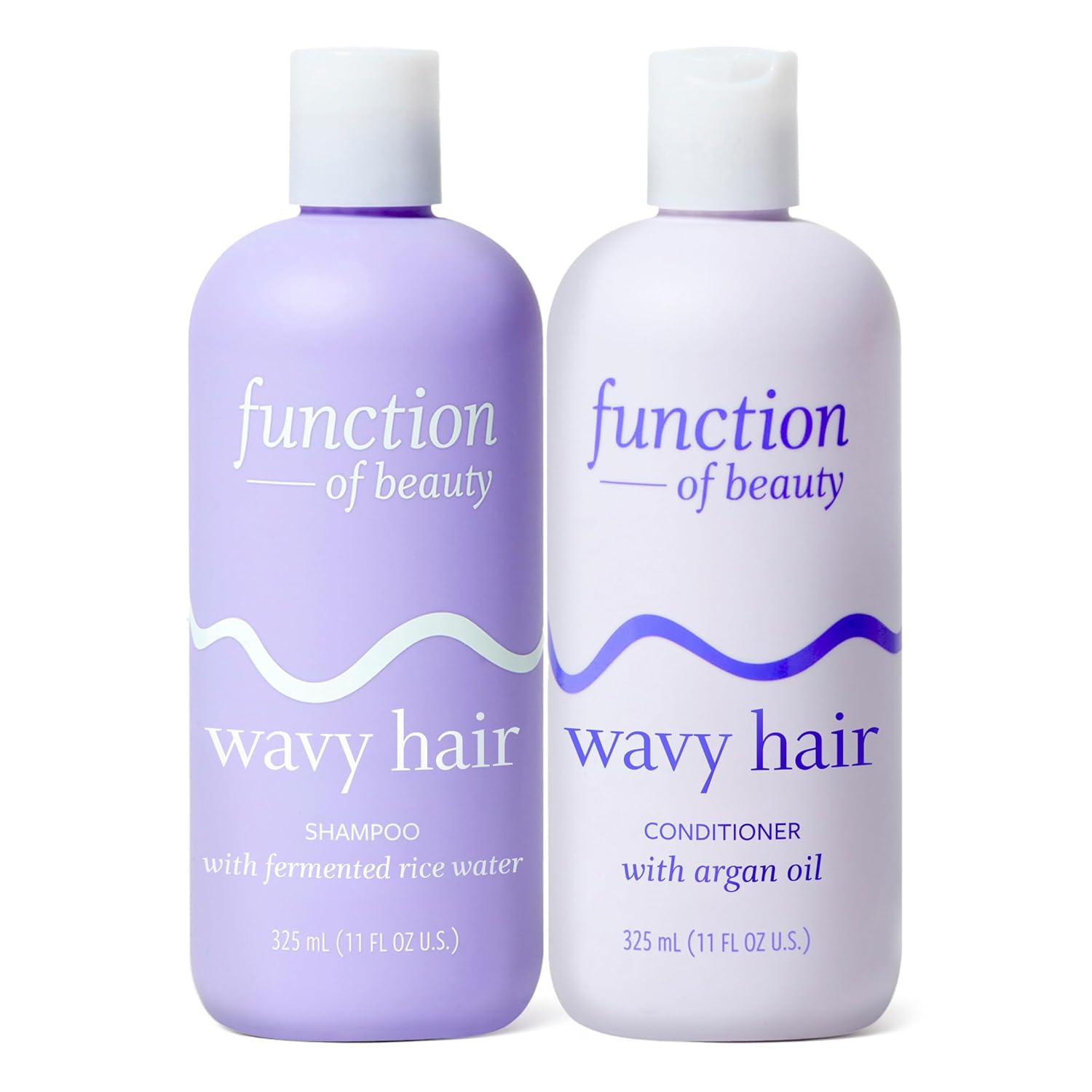
Function of Beauty Wavy Hair Shampoo Review: Unlock Your Best Waves
Salon-grade gentle cleansing formula designed to maintain optimal moisture balance, protect hair cuticles, and deliver touchable softness without harsh sulfates or parabens.

Curl Rhythm Deep Moisturizing Shampoo: The Ultimate Curl Savior
Salon-grade gentle cleansing formula designed to maintain optimal moisture balance, protect hair cuticles, and deliver touchable softness without harsh sulfates or parabens.
Frequently Asked Questions
Is sulfate-free shampoo actually better for wavy hair?
Yes, but with a caveat. Sulfates are highly efficient at removing oil, but they can leave the hair cuticle too open and stripped, which leads to frizz and a lack of definition in waves. Sulfate-free shampoos are gentler and help maintain the hair's natural lipid barrier. However, the "better" shampoo is the one that cleanses effectively without leaving a heavy residue. If a sulfate-free shampoo leaves your hair feeling greasy, it is likely too heavy for your hair type, not because it is sulfate-free.
Will a sulfate-free shampoo weigh my waves down?
It depends on the formulation. A shampoo designed for curly or coily hair (Type 3 or 4) will likely weigh wavy hair down because it contains heavy butters and conditioning agents. A dedicated lightweight shampoo for waves will not. The key is to look for a "clean-rinsing" formula that emphasizes volume and scalp health over "deep moisture."
How often should I wash Type 2 wavy hair?
This varies based on your scalp type. Those with oily scalps and fine wavy hair may need to wash every 1 to 2 days to prevent sebum from flattening their waves. Those with drier scalps or thicker waves may find that washing 2 to 3 times a week is ideal. Regardless of frequency, using a balanced sulfate-free cleanser ensures you aren't stripping your hair every time you wash.
Should wavy hair use co-wash or a low-poo cleanser?
For the vast majority of wavy-haired individuals, a "low-poo" (a gentle, sulfate-free shampoo) is superior to a co-wash (conditioner-only washing). Co-washing often leaves too much residue on Type 2 hair, which leads to the "stringy" look and a total loss of volume. If you prefer co-washing, it should be done sparingly, and always followed by a clarifying wash to remove the buildup.